
Whoa! The Solana on-chain world moves fast. Seriously. For anyone trying to follow tokens, transactions, or wallet activity, things can get blurry in a hurry. Solscan offers a focused lens — transaction histories, token accounts, program logs, and token trackers all in one place — so you can cut through noise and find the facts. But not everything is obvious at first glance. Here’s a grounded walkthrough that points out the helpful bits, the rough edges, and the smart ways to use Solscan without getting lost in raw data.
First: what is Solscan, in plain terms? It’s a blockchain explorer tailored to Solana. Short answer: think of it like a public ledger viewer with added filters and dashboards for tokens. Medium answer: it parses blocks, decodes instructions, and surfaces token metadata, so you can see token mints, supply changes, mint authority actions, and transfers. Longer answer: beyond a mere block browser, Solscan’s token tracker aggregates holder lists, shows real-time market movements for SPL tokens when available, and links token mints to on-chain metadata — which is crucial when vetting a new project or auditing an airdrop.
One practical pattern: when you land on a token page, check the mint address first. Seriously. The mint is the canonical identifier — names and symbols can be copied, but the mint hash is unique. Look for total supply, decimals, creator and freeze authority, and token accounts with large balances. Those clues often reveal if supply is centralized or if a project is doing something legit. On-chain proofs beat whitepapers. Hmm… something felt off about airdrops that list suspiciously simple token symbols; the mint information usually tells the tale.
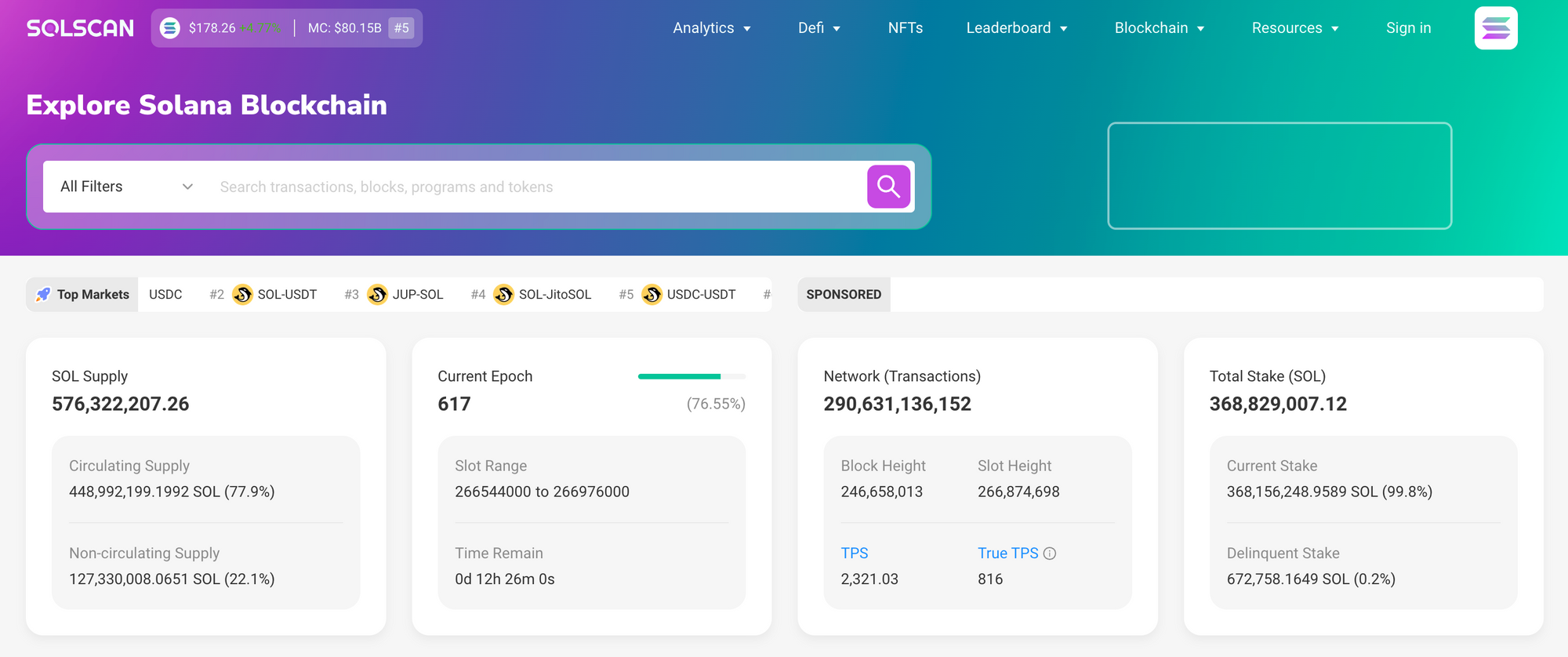
Where to find the token tracker on Solscan and why it matters
When you open a token’s page on Solscan you’ll see its holders, transfers, and metadata. If you want the official entry point, check this link: https://sites.google.com/cryptowalletextensionus.com/solscan-explorer-official-site/. Use the holder list to spot concentrated ownership. Use transfers to trace large movements. Use metadata to validate images and links embedded in NFTs. These three views — holders, transfers, metadata — are the most actionable for day-to-day checks, whether you’re analyzing rug-risk, verifying token receipts, or investigating airdrop eligibility.
Okay, so check this out — hit the holders tab and sort by balance. Short wallets at the top are red flags sometimes. Medium-sized wallets with repeated transfers could be market makers. Bigger ones might be the founding team. Long tail distribution suggests organic distribution, though that’s not a guarantee. On one hand, a low number of holders can mean concentrated risk. On the other hand, newly minted tokens will naturally have few holders at first. Context matters — timing, announcements, and cross-referencing on-chain events help build the right story.
Pro tip: use the transfer logs to follow money. Transfer logs include instruction details and often program IDs, which reveal whether an operation was a plain transfer, a swap, or an interaction with a particular DeFi program. You can dig into program IDs to understand who’s powering a token’s liquidity moves. That helps when you’re trying to separate organic trading from automated market-making or wash trading. Oh, and by the way… export options exist on some pages, so you can pull CSVs for offline analysis if you want to run your own checks.
Security and verification deserve a paragraph. Short: double-check mint addresses. Medium: verify token metadata signatures and creator addresses when possible. Long: consider layering on additional checks — cross-reference the token’s mint on multiple explorers, read the smart contract program interactions, and inspect associated metadata URIs to ensure images or JSON files host content you recognize or expect, because sometimes front-end names are decoys meant to mislead casual lookers.
There are limits though. Solscan aggregates a lot, but not everything is neatly annotated. Some newer tokens lack proper metadata, some creators don’t set up verification badges, and not all marketplaces set consistent on-chain fields. Initially one might assume a missing metadata field equals malicious intent. Actually, wait—let me rephrase that—missing metadata can mean anything from an incomplete launch to a rushed mint. So don’t flip to panic mode too quickly; use a checklist instead: mint address, supply, major holders, recent transfers, and program IDs involved. If multiple items look weird, that’s when you escalate your skepticism.
For power users: features like program trace and instruction decoding are gold. Those let you see the sequence of calls in a transaction and understand which programs were invoked. Want to know if a token transfer also called a staking program, or whether a swap triggered multiple liquidity pools? That level of detail helps when auditing smart contract interactions or reconstructing an attack sequence. It is technical, yes. But it is also the data that separates guesswork from evidence.
Some practical workflows I’ve seen among analysts (generalized, not personal confessions): 1) paste mint into Solscan, 2) examine holders and top accounts, 3) open recent big transfers to view program traces, 4) check metadata URIs, 5) cross-check suspicious wallet activity over time. This routine catches many common scams — duplicate-token schemes, mint-and-dump patterns, and mixer-like obfuscations. It’s not perfect. Nothing is. But it’s repeatable and efficient.
What bugs me about explorers sometimes is UI assumptions. Dashboards assume a certain skill level. Short help pop-ups would help. Also, explorers can be noisy — lots of fields, not all of them relevant to every user. But the trade-off is transparency. The rawness is the point. You get primary data to form your own view, which is better than trusting a single third-party rating.
Lastly: practical caution. Don’t paste private keys into sites. Really. Never. Solscan is a viewer — it doesn’t need your seed or private key — but phishing clones exist. Validate URLs carefully. Consider using read-only tools or wallet-watch modes. And remember: an on-chain footprint can be followed; privacy has limits. If you’re evaluating tokens for wallets you control, consider isolating funds or using smaller test amounts to probe contracts before committing large sums.
FAQ
How do I confirm a token is legitimate?
Start with the mint address. Confirm metadata and creator fields when present. Check holder distribution and recent big transfers. Decode transaction instructions to see what programs are being called. Cross-check with project announcements and community channels, but trust the on-chain evidence first.
Can Solscan show me who owns a wallet?
No — Solscan shows wallet addresses and on-chain activity, but it doesn’t tie real-world identities to those addresses. You can infer relationships based on repeated patterns, program interactions, and token flows, though that remains circumstantial unless corroborated externally.
