
Check this out—Solana explorers changed how I debug on-chain activity.
Whoa!
They show transactions fast and give context for tokens and programs.
Initially I thought explorers would all look and feel the same, but after using several I realized interface design, query speed, and developer tools make a huge difference when tracking complex transactions across many accounts.
My instinct said the quickest tools would be the most reliable, though that’s not always true.
Really?
Yes — and among them, some explorers stand out for their balance of speed and clarity.
On the surface they look simple, but power often hides under the hood in subtle places.
Things like instruction decoding, inner instruction traces, and compact logs turn a confusing hash into a readable story.
Oh, and by the way… interface polish matters more than you’d expect when you’re under time pressure.
Hmm…
Initially I thought on-chain analytics were only for researchers.
Actually, wait—let me rephrase that: analytics are for anyone who needs to make decisions — traders, devs, auditors, and curious users — because the data tells a story about money flow and contract behavior that screenshots can’t capture.
On one hand explorers provide transparency, though actually some UX choices can hide nuance that you later wish you had captured.
Something felt off about raw data dumps; I wanted filters and contextual notes.
Here’s the thing.
I dug into token pages, holder distributions, and historical snapshots.
The balance charts and holder concentration views are especially useful for vetting new mints.
When you’re evaluating a project’s tokenomics, being able to trace large movements back to specific transaction patterns — and then to the program instructions that executed them — changes how you assess risk and sustainability over time.
I’m biased, but these are the kind of transparency tools I want as a user.
Where I Land When I Need Quick, Actionable Context
Check out one of my go-to tools when I need a quick dump of on-chain context.
Wow!
I’ve used many explorers, but the balance between developer tools and polished UI matters when you’re troubleshooting in real conditions.
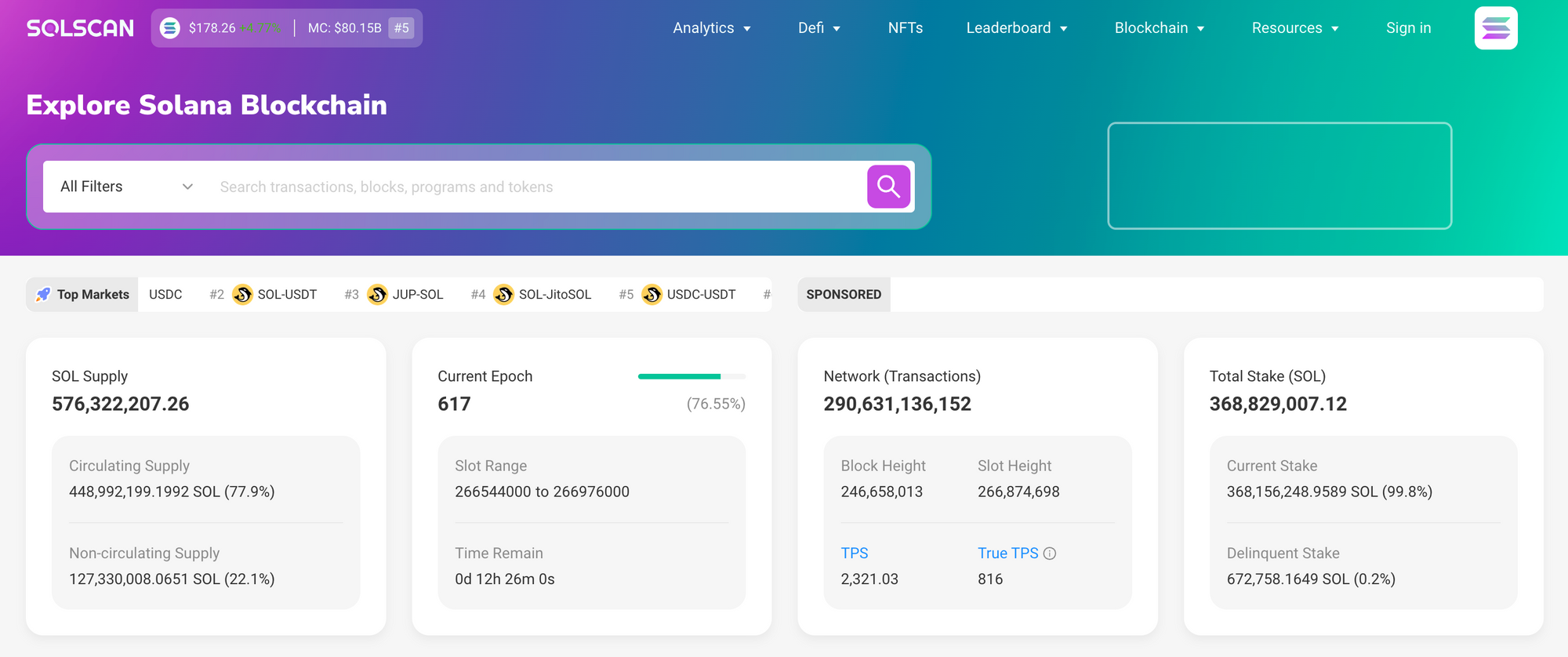
For practical day-to-day work I often land on solscan explorer because it surfaces program logs, token history, and more without forcing me through clunky menus.
That doesn’t mean it’s perfect — some advanced filters are missing and occasionally the query results need a manual refresh, which is annoying when you’re debugging a time-sensitive arbitrage path during network congestion — but for most tasks it saves time.
Seriously?
Yes, it saved me hours when tracing nested CPI calls across multiple programs during a weird outage last month.
I could follow a payload from a DEX swap into a lending protocol and then to a staking program, mapping state changes along the way.
Those chain-of-custody traces matter when you’re investigating failed transactions or trying to reconstruct state changes that explain unexpected balance shifts across an app’s vault accounts.
Also the community-contributed notes and annotations sometimes point out gotchas before official docs catch up.
Whoa!
But there are trade-offs that users should be mindful of when choosing explorers.
Different explorers prioritize different signals — speed, depth, or UX simplicity — and that choice affects how quickly you can get to answers.
If you need deep forensic analysis you might use specialized analytics platforms in addition to explorers, because they can index historical state differently and provide richer cross-correlation tools.
It’s not a one-tool-fits-all world for real.
I’m not 100% sure, but…
My final take is practical: use explorers to accelerate learning and troubleshooting, not to be the only source of truth.
Over time you learn which pages to open first, which log lines are worth copying into a local grep, and when a transaction pattern is benign versus indicative of a deeper protocol bug, and that pattern recognition is more valuable than memorizing every RPC call.
This part bugs me: sometimes the docs lag behind actual on-chain behavior by days, and you end up trusting what you can see more than what’s written.
Somethin’ to keep in mind…
FAQs
What exactly is a Solana explorer?
It’s a web tool that lets you inspect blocks, transactions, accounts, and program instructions on the Solana network.
Why use an explorer instead of just an RPC client?
Explorers bundle decoded logs, token metadata, and history into a human-readable interface, which speeds up triage and reduces guesswork when you’re under pressure.
Is using explorers safe?
Yes — viewing on-chain data is read-only. Still, be cautious about signing transactions or entering private keys into any third-party site. I’m biased, but cold wallets and separated tooling are best practice.
